Download Airway Morphology of a Rare Pediatric Diffuse Lung Disease: Statistical Shape Analysis of airway trees from patients diagnosed with Neuroendocrine Cell Hyperplasia of Infancy - Marlijne Cook | ePub
Related searches:
Airway Management of Children With Rare Syndromes
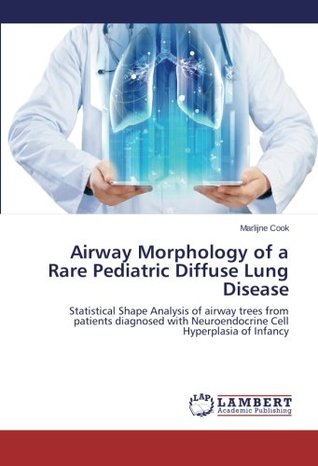
Airway Morphology of a Rare Pediatric Diffuse Lung Disease: Statistical Shape Analysis of airway trees from patients diagnosed with Neuroendocrine Cell Hyperplasia of Infancy
and Acquired Large Airway Disorders in Pediatric Patients
Developmental Aspects of the Upper Airway Report from an
Airway Morphology of a Rare Pediatric Diffuse Lung Disease, 978-3
Developmental Aspects of the Upper Airway: Report from an NHLBI
AIRWAY OBSTRUCTION IN CHILDREN - NCBI - NIH
The contribution of airway development to paediatric and adult lung
Airway Problems in Neonates—A Review of the Current - Frontiers
Small airways diseases: detection and insights with computed
Upper Airway Obstruction American Academy of Pediatrics
Airway Conditions Condition UT Southwestern Medical Center
Craniofacial and upper airway morphology in pediatric sleep
(PDF) Pediatric Airway Pathology - ResearchGate
Pediatric Airway - Department of Pediatrics
Paediatrics: Paediatric airway and breathing considerations
Pediatric Airway Iowa Head and Neck Protocols
Pediatric Airway Management - STRAC
Pediatric Difficult Airway Management: New Modalities
A Rare Cause of Lower Airway - ClinMed International Library
Congenital Pulmonary Airway Malformation (CPAM) Fetal Care
(PDF) Analysis of pediatric airway morphology using
Analysis of pediatric airway morphology using statistical
Congenital Epulis: Unusual Etiology of Airway Obstruction and
Advanced Pediatric Emergency Airway Management: A
Airway in the Newborn Patient - MedCrave online
Airway Radiology Key
Respiratory Care of Children with Rare Diseases
Anatomy and assessment of the pediatric airway - McGill University
Changes in craniofacial and airway morphology as well as quality of
Adult and Pediatric Epiglottis (Chapter 44) - Clinical Airway
Ultrasound of the airway Kundra P, Mishra SK, Ramesh A
Erratum to: Analysis of pediatric airway morphology using
Airway in the Newborn Patient - Medcrave
Case Report Treacher Collins Syndrome : An Alternative Airway
Down Syndrome Airway — Pediatric EM Morsels
Congenital pulmonary airway malformation Radiology
Functional Anatomy and Physiology of Airway IntechOpen
FDA Approves First Therapy for Children with Debilitating and
Management of malignant airway obstruction - Oberg - AME
Large airway diseases in pediatrics: a pictorial essay
Point of care airway ultrasound to select tracheal tube and
Airway Imaging: Principles and Practical Guide Clinical Gate
Introduction: advanced airway management in pediatrics is a rare, high stakes skillset. Developing proficiency in these skills is paramount, albeit challenging. Providers require innovative approaches to address initial training and maintenance of procedural competency.
Fda approves koselugo (selumetinib) for the treatment of pediatric patients, 2 years and older, with neurofibromatosis type 1 (nf1), a genetic disorder of the nervous system causing tumors to grow.
Congenital pulmonary airway malformations (cpam) are multicystic masses of segmental lung tissue with abnormal bronchial proliferation. Cpams are considered part of the spectrum of bronchopulmonary foregut malformations.
Normal air-filled structures seen on lateral plain films are the nasopharynx, oropharynx, and hypopharynx. Air in the pharynx outlines the soft palate, uvula, base of the tongue, and nasopharyngeal airway� any sizable soft tissue pathology results in deviation or effacement of the airway.
Delay additional assessment (airway, breathing, circulation and mental status) until transport is underway. During transport, initial assessment is done: airway assessment for effectively moving air and potential for compromise airway: airway is clear, (no stridor, gurgling) but there is a potential for compromise as the child is not alert.
Mar 30, 2017 airway problems in the neonatal population are often life threatening and raise pediatric and neonatal intensive care units, critical care division, great 14), and understanding the airway morphology is important.
In this chapter, we scope the importance of functional anatomy and physiology of the upper airway. The upper airway has an important role in transporting air to the lungs. Both the anatomical structure of the airways and the functional properties of the mucosa, cartilages, and neural and lymphatic tissues influence the characteristics of the air that is inhaled.
What is equally important to remember is that within the pediatric population as a whole, there exists other unique populations that require even further appreciation of anatomic and physiologic variances. Children with down syndrome deserve such specific consideration particularly with respect to the down syndrome airway.
Patients with neurofibromatosis type 1 may have large neurofibromas within the mediastinum and neck� which may compress the airway. Though rare in children, primary tumors of the lung such as type 3 pleuropulmonary blastoma, which typically presents as a large solid mass, can compress the trachea and bronchi�.
Airway management is key component in various clinical scenarios, including the operating room during the provision of anesthetic care, in the pediatric intensive care unit, in the emergency department or during resuscitative efforts. This article is divided into three sections, anatomy and fisiology of the neonatal upper airway.
Pediatric sleep-disordered breathing is a continuum, with primary snoring at one end, and complete upper airway obstruction, hypoxemia, and obstructive hypoventilation at the other.
Pierre robin sequence is also known as pierre robin syndrome or pierre robin malformation. It is a rare congenital birth defect characterized by an underdeveloped jaw, backward displacement of the tongue and upper airway obstruction. Cleft palate is also commonly present in children with pierre.
Pediatric cups assessment category assessment actions example critical absent airway, breathing, or circulation perform rapid initial interventions and transport simultaneously severe traumatic injury with respiratory arrest or cardiac arrest unstable compromised airway, breathing, or circulation with altered mental status perform rapid initial.
Rare pediatric disease designation is granted by the fda to encourage treatments for serious or life-threatening diseases primarily affecting children 18 years of age and younger and fewer than 200,000 people in the united states. Under the rare pediatric disease program, a sponsor that receives approval for a drug or biologic for a rare.
Contributed to their airway compromise or chronic re-spiratory failure, and most tracheostomy placements were initiated during unplanned pediatric icu admis-sions and after acute/acute-on-chronic critical illness.
During the course of pediatric anesthesia, airway and respiratory complications are the most common causes of morbidity and fre- quently occur in healthy children.
The appropriate rate depends on the patient's age; generally, except in the case of a newborn, anything over 160 beats per minute suggests shock.
Complications are rare, estimated between 2–5%, and include hemorrhage, endobronchial ignition, electric shock to the operator, and airway perforation. Loss of efficacy can occur with bleeding due to the diffusion of the current across a larger surface area.
(ccams are sometimes referred to as congenital pulmonary airway malformations or cpams. Lobar emphysema is a rare, serious condition that can interfere with an infant’s airways by trapping airflow during breathing.
Jun 26, 2017 seventeen children presenting with airway obstruction have been early infancy with stridor and hoarseness of voice is again a rare condition.
Dec 30, 2014 airway morphology of a rare pediatric diffuse lung disease, 978-3-659-66521- 9, neuroendocrine cell hyperplasia of infancy (nehi) is a rare.
Pediatric airway evaluation: the evaluation of stridor in pediatric patients difficult airway (adult and pediatric considerations) subglottic hemangioma laryngomalacia.
Traditional studies of airway morphology typically focus on individual measurements or relatively simple lumped summary statistics. The purpose of this work was to use statistical shape modeling (ssm) to synthesize a skeleton model of the large bronchi of the pediatric airway tree and to test for overall airway shape differences between two populations.
Hematogenous spread from distant neoplasms directly to large airways is extremely rare in pediatric patients. Lymphoma consists of the hodgkin and non-hodgkin type, with the former having a higher prevalence on the first decade of life and the latter having the same prevalence on the first and second decades of life.
There is strong support for reduced upper airway width in children with obstructive sleep apnea. Larger well-controlled trials are required to address the relationship of craniofacial and upper airway morphology to pediatric sleep-disordered breathing in all 3 dimensions.
Ents its own challenges in terms of airway management: intubation, ventilation, the increased risk for desatura-tion and/or aspiration, or other non-airway complica-tions. 2 therefore, careful consideration should be given when deciding which airway devices and anesthetic techniques to use during airway management of chil-dren with rare diseases.
0 craniofacial and upper airway morphology in pediatric sleep-disordered.
(circulation, airway, breathing) so chest compressions are started sooner. The assessment of the pediatric patient who does not require cpr still follows the a-b-c (airway, breathing, circulation) sequence.
Importance of the adequate management of the pediatric airway the morphology of the lower third of the face and the presence of head and neck has failed, an extremely rare situation in pediatrics which can be reversed by improvin.
Congenital pulmonary airway malformation (cpam) is a mass of lung tissue that forms in the condition is relatively rare, affecting about 1 in 25,000 pregnancies. At the cincinnati children's fetal care center, our experienced.
Sep 3, 2019 passive myofunctional therapy� oral appliance� craniofacial morphology� airway morphology.
Pediatric airways may be challenging, and the presence of a large anterior mass further confounds securing a safe airway in some cases. Airway complications including oral bleeding, aspiration, and pneumothorax may occur, making successful intubation more of a challenge.
Professor of pediatrics eudowood division of pediatric respiratory division of pediatric pulmonary department of pediatric johns hopkins school of medicine.
We use cookies to distinguish you from other users and to provide you with a better experience on our websites.
Airway conditions affect millions of people and include a wide range of disorders. Airway stenosis: a narrowing of the airway; airway cancer: a rare cancer that at our multidisciplinary pediatric airway clinic (mpac), ent physicia.
Ventricular arrhythmia is a rare occurrence in the pediatric population and is often an unexpected finding in patients with otherwise normal hearts. However, when a child does present with ventricular arrhythmia, specific causes warrant consideration and guide the subsequent work-up and treatment strategy.
Remains rare, it is one of the primary causes of perioperative morbidity and mortality. Airway management is key component in various clinical scenarios, including the operating room during the provision of anesthetic care, in the pediatric intensive care unit, in the emergency department or during resuscitative efforts.
Stridor is noisy breathing that occurs due to obstructed air flow through a narrowed airway. Stridor breathing is not in and of itself a diagnosis, but rather is a symptom or sign that points to a specific airway disorder. The timing and the sound of your child's noisy breathing provides clues to the type of airway disorder:.
Voice and swallowing disorders lung and respiratory system benefit from experts who use advanced techniques to treat both common and rare conditions.
Purpose to examine the craniofacial and airway morphology as well as the quality of life before and after passive myofunctional therapy (pmft) for 1 year in children with obstructive sleep apnea (osa). Methods forty children with osa wearing an oral device nightly (treatment group) and seventeen without the device (control group) were followed up for 1 year.
Congenital or acquired disorders of the pediatric airway can affect the upper, lower, or entire airway. There are fundamental differences between the anatomy and physiology of the neonate.
The pediatric airway differs from adult airways in four main respects. At birth the larynx is at the level of the third cervical vertebra.
Analysis of pediatric airway morphology using statistical shape modeling. December 2015; (nehi) is a rare lung disease associated with significant air trapping.
The upper airway, defined as the air-conducting passages from the level of the nose to the carina, is susceptible to congenital and acquired abnormalities that affect up to 3% of the pediatric population� the upper airway serves the primary purposes of respiration, deglutition, clearance of secretions, separation of nasal and oral passageways.
There are a number of developmental characteristics that distinguish the pediatric airway from the adult airway: the pediatric airway is smaller in diameter and shorter in length than the adult’s. The young child’s tongue is relatively larger in the oropharynx than the adult’s.
Dec 14, 2020 the sites of respiratory system involvement have been described more completely for jorrp; 52% of children have only laryngeal involvement.
This spectrum of rare congenital disorders, referred to as the agenesis-aplasia-hypoplasia complex, is characterized by large airway underdevelopment. Pulmonary hypoplasia, generally caused by lesions that preclude normal lung growth, is the least severe form, characterized by bronchial, lung, and pulmonary artery hypoplasia.
Airway to preoxygenate in a pediatric patient with treacher-collins syndrome. The prolonged use of the laryngeal mask airway in a neonate with airway� obstruction and treacher collins syndrome.
Congenital nasal pyriform aperture stenosis (cnpas) is a rare cause of upper airway obstruction in the newborn caused by excessive growth of the medial nasal process of the maxilla. 2 affected pediatric patients may present with respiratory distress, episodic apnea, cyclical cyanosis, or sudden total airway obstruction.
The tongue is relatively larger, thus making a disproportionate contribution to airway obstruction and moving the glottis anteriorly (especially in children with craniofacial abnormalities, nmj or cns disease, tumors, hemangiomas, or uris).
Post Your Comments: