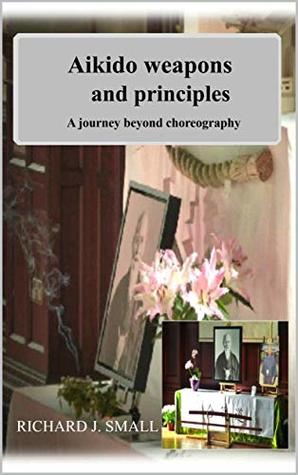
Read online AIKIDO WEAPONS AND PRINCIPLES: A JOURNEY BEYOND CHOREOGRAPHY - Richard Small file in PDF
Related searches:
In this style of aikido weapons practice is an integral part of the practice forming as it does an indispensable part of the system. In the online dojo, weapon training constitutes usually half of the practice time. The weapons used are the wooden sword (bokken) the wooden staff (jo) and the wooden knife (tanken/ tanto).
Aikido uses weapons as instruments to understand the principles of aikido. Aikido does not use weapons in respect to knowing how to fight with.
Although aikido is often thought of as a nonviolent, noncompetitive martial art, the use of weapons was introduced by the art's founder o'sensei morihei ueshiba.
The new york yoshinkan aikido dojo was founded in 1994 by david fryberger sensei as the only school of aikido in new york city teaching gozo shioda sensei's yoshinkan style. Fryberger sensei 6th dan is now the resident teacher of aikido on ventura in california. The new york yoshinkan aikido dojo is now under the instruction of roman solonyy.
Although this topic is addressed very early in the practice of kendo, especially in the case of the shinai that must be maintained very regularly to avoid any defect or even safety risk, the need to control one's weapons may seem less obvious to a great number of aikido practitioners and other budoka.
Three principal weapons used in aikido are the jo (staff), bokken (japanese wooden sword) and tanto (knife). By training with weapons, students get a better understanding of general aikido principles, such as ma-ai (proper distancing from an attacker), and moving off the line of attack.
The aikido ken, jo, and tanto kata are creations of those shihan from modern aikido. Most of them created their weapons kata outside of any of morihei ueshiba’s teachings. The legacy of modern aikido has been to create weapons kata from various sources to add to the curriculum.
Aikido was the result of his intensive study into the japanese sword, stick and body arts which he rationalised and fused into a unified system of principles.
Aikido demonstration 2: our instructors will demonstrate aikido techniques in a dynamic style.
Aikido – mind body principles was filmed at a four day aikido seminar which ledyard and drachman senseis co-taught at aikido eastside. The material covered in this set of videos is unique to our knowledge. It focuses, not on technique, but on the principles that make the techniques work with “aiki”.
O-sensei created a trinity of tai-jutsu (the empty-handed techniques of aikido), aiki-ken (sword) and aiki-jo (staff).
The three principles weapons used in aikido training are: bokken – a type of wooden training sword. Tanto – a wooden training “blade” styled like a samurai dagger.
Through the practice of aikido, one integrates the mind, body and spirit, seeking perfection as a human being. The main principle in the execution of the techniques is to control the aggressor without inflicting injury by blending with and redirecting the force of attack.
Jo nage is an art form on its own but has been handed down as one of the weapons systems that compliments empty hand aikido training techniques.
Many techniques are shared and may or may not be specific to standard instruction in other aikido organizations. However, sensei reminds practitioners of the following: aikido is about energy (“aiki”) and not just movement.
Teachers can tell students to 'avoid' a thousand times but they never do it, yet after only a few lessons training with weapons any student will soon begin to understand. One need not be a master swordsman to be able steal the principles from weapons movement and apply them to aikido.
Building on the authors' belief that no empty-hand system is complete without weapons training, aikido weapons techniques: the wooden sword, stick, and knife of aikido demonstrates weapon use both as a training tool to better illustrate aikido principles, and as a self-defense against weapon attacks, focusing on the three primary weapons used.
The curriculum is broad but always grounded in principles that are universally applicable, both empty handed and with weapons. Aikido auckland seishinkan is dedicated to sharing the techniques, principles and spirit of the way of united energy to children, teens and adults as a path for personal growth and building strong relationships�.
7 jan 2021 for those of you not at the dojo since covid, we have spent the last nine months doing a variety of weapons practices.
More than part of a martial art, aikijo is being taught with internal energies and principles in mind.
Some dojo hold classes which are devoted almost exclusively to training with jo (staff), tanto (knife), and bokken (sword), the three principal weapons used in aikido.
Master the wooden weapons used in aikido with this comprehensive martial arts training manual. Although aikido is often thought of as a nonviolent, noncompetitive martial art, the use of weapons was introduced by the art's founder o'sensei morihei ueshiba.
Finally, by increasing the sense of danger, one can learn important principles of aikidō training, such as control, responsibility, irimi isoku (entering in an instant) and awase (‘blending/harmonizing’).
Therefore the physical principles which must guide true aikido practice if it is to achieve total, rather than partial.
Riai (harmony of principles) iwama style aikido practitioners don’t view weapons practice as a “supplement”, or something interesting to do every now and then. We view aiki-ken and aiki-jo as an inseparable component of aikido training.
Aikido techniques and principles of movement have roots in japanese weapons systems used by the samurai in warfare. These martial art forms have been modified over the years and are practiced in order to enhance and deepen our understanding of aikido. Our weapons' training includes bokken (wooden sword), jo (wooden staff) and tanto (wooden knife).
Morihei ueshiba taught that aikido is a technique that incorporates moves that are more defensive than offensive. In fact, the martial art of aikido seeks not to injure but to defend against and stop an attacker. This is the main reason live weapons are rarely used in aikido.
Training in weapons kata is a way of facilitating understanding of general principles of aikido movement. Weapons training can add an element of intensity to aikido practice, especially in practicing defenses against weapons attacks.
Aikido is a modern budo founded by morihei ueshiba after he had mastered many traditional japanese martial arts and engaged in profound spiritual training�.
It is commonly believed that the point of weapons training in aikido is to improve the empty hand techniques. With this in mind, since many of aikido’s basic movements are based upon sword related principles, it certainly makes sense to practise using a sword, the enigma being, of course, that one could devote a lifetime of study to this.
Aikido weapons training is helpful for learning correct distance, to ensure safety. Repetitive moving in and out of the striking range of a weapon helps you develop an intuitive sense of distance and timing, essential in empty-hand training. Also many advanced aikido techniques involve defenses against weapons.
Aikido is a martial art founded by morihei ueshiba, that focuses on harmonising with your opponent, it can be practiced as a sport, self defence and an art using hand to hand and japanese weapons.
December 14, 1883 – april 26, 1969) was a martial artist and founder of the japanese martial art of aikido.
However, as a student progresses, he/she studies the principles of aikido through the use of the bokken (wooden sword), jo (wooden staff), and tanto (wooden knife). Weapons work reveals the importance of proper distance, timing, and precision of body movement.
Aikido is an incredible martial art with awesome self defense theories and applications. Unfortunately, many functional self defense and martial arts practitioners have overlooked aikido and consider it to be ineffective, primarily due to unrealistic training in a majority of schools.
Before starting aikido, he had already excelled in the arts of judo and karate. He had a lifelong commitment to paying attention to the principles of the art of aikido and understanding the reasons behind any posture, technique, and movement, as transmitted directly to him by our teacher mitsugi saotome sensei.
Building on the authors' belief that no empty-hand system is complete without weapons training, aikido weapons techniques: the wooden sword, stick, and knife of aikido demonstrates weapon use both as a training tool to better illustrate aikido principles, and as a self-defense against weapon attacks.
Aikido is a japanese martial art based on the principles of harmony that contains both empty hand and weapons techniques.
Founded by morihei ueshiba, aikido is a martial art that focuses on coupled with training in traditional japanese weapons such as the sword, staff and knife. Loyalty, gladly sacrificing life (but never honor) in the name of princi.
Taken at aikido eastside during a one day seminar on dealing with multiple attackers with jo, bokken, and tanto.
Aikido practice weapons bokken / bokuto� wooden sword jo: a wooden staff representing a yari (which is a bladed spear like.
We practice an extensive range of aiki weapons techniques using the jo (short staff), bokken (wooden practice sword) and the tanto (knife).
26 nov 2015 finally, weapons training is a good way to teach the principles behind the lines of attack and defense.
3 mar 2020 “[i'm] not sure if we have touched on this before, but the jo and bokken? the importance of them from a martial point of view? what do we gain.
Aikido is primarily known for and practiced as an empty-handed art (tai-jutsu, meaning “body arts”). However, as a student progresses, he/she studies the principles of aikido through the use of the bokken (wooden sword), jo (wooden staff), and tanto (wooden knife).
Aikido training incorporates the use of two primary weapons: bokken (wood training sword) and jo (staff, about four feet long).
Practice with the bokken (wooden sword), jo (wooden staff) and tanto (knife) is a unique and important part of our aikido curriculum.
In aikido we strive to develop a body fully connected to the ground, connected.
Finally, weapons training is an excellent way to learn principles governing lines of attack and defense. All aikido techniques begin with the defender moving off the line of attack and then creating a new line (often a non-straight line) for application of an aikido technique.
British aikido board the national governing body for aikido in the united kingdom. Aikido is a martial art founded by morihei ueshiba, that focuses on harmonising with your opponent, it can be practiced as a sport, self defence and an art using hand to hand and japanese weapons. To find something in the general terminology, click on a letter.
The aikido sangenkai is a member of the sangenkai, an international association of groups and individuals across north and south america, asia, europe and australia that come from a widely diverging range of arts and disciplines but are united by a common methodology and principles of training.
Learn self defense in a positive and collaborative atmosphere. While honoring traditions, we focus on real life applications of the core principles of aikido. Our training programs include full spectrum of aikido techniques, extensive weapons training, active meditation, breathing, in-depth look at bio-mechanics of the human body and energy flow.
Dojo - a training hall for traditional japanese arts, including aikido and other martial arts (lit.
Fifth, training in weapons kata is a way of facilitating understanding of general principles of aikido movement. Sixth, weapons training can add an element of intensity to aikido practice, especially in practicing defenses against weapons attacks.
Aikido's fundamental principles include: irimi (entering), atemi, kokyu-ho (breathing control), sankaku-ho (triangular principle) and tenkan (turning) movements that redirect the opponent's attack momentum. Its curriculum comprises various techniques, primarily throws and joint locks.
I was throwing out all the effective principles i had learned in aikido, like ma-ai (distance control), de-ai (timing, and working with partner’s triggering of intent), irimi and tenkan, in order to plant myself toe-to-toe within range of my opponent’s weapons, tactics and techniques.
The purpose of aikido institute of san francisco is to teach and develop the art of aikido in the most modern and profound way; and through the training – cultivate character. Included in our curriculum are classes of bokken (wooden sword) and jo (wooden staff). Training in classical japanese weapons complement and enhance the training in aikido.
Taking this into account, with aikido weapons training, one should be able to develop his skills, intuitiveness, and reflexes in both the art of attacking and defending movements. However, among the weapons used in the aikido weapons training, is the katana.
We study traditional japanese solo sword and staff forms, aikido weapons disarming throughout our goal is to embody basic principles of aiki, or unity.
The three principal weapons used in aikido training are the jo (staff), tanto (knife), and bokken (sword). Many aikido movements are derived from classical weapons arts. There is thus a historical rationale for learning weapons movements.
Aikido weapons techniqueswomen of chinathe spiritual foundations of dynamische sphärethe principles of aikidoaikido for lifethe way of aikidoaikido.
Post Your Comments: