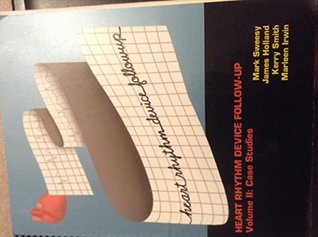
Read Heart Rhythm Device Follow-up Volume II: Case Studies - Mark Sweesy file in PDF
Related searches:
Alivecor: a singular focus on clinical wearables for heart rhythm detection one of the first entries into the medical-grade ecg wearable device market was alivecor. Considered the granddaddy of remote ecg monitoring, the company obtained its first fda approval for its single-lead device in 2012.
Cardiac rhythm remote monitoring devices used to allow physicians and doctors to monitor more and more patients. The compliance of follow-up is become easier for patients, the device helps to alleviate the volume of in-office patient follow-ups and it is also able to give early warnings related to cardiac problems of the patient to the physician.
Volume tilt table hemodynamic volume all device evaluations are linked to the patient’s electronic medical record. Referring physicians can access the data through secure access. Remote device evaluation broadens patient access to care and increases our ability to detect device malfunctions.
Nationwide longitudinal follow-up of riata leads under advisory at 3 annual screenings� report from the netherlands heart rhythm association device advisory.
Device infection is an uncommon but devastating complication after implantation and confers a high in-hospital mortality rate. Pacemaker-related endocarditis shows a high mortality of 27% after a mean follow-up of 20 months.
11 jul 2019 the national audit of cardiac rhythm management (crm) collects crm devices are implanted in patients with abnormal heart rhythms, these devices are helpful to record arrhythmias occurring intermittently, and monito.
There was a period of oos acceleration driven numerically by patient death in the sixth to ninth years of follow-up.
9 oct 2020 volume i is written for both the novice and veteran in the cardiac rhythm management field.
Device interrogation at implant and during early and late follow-up should be a mandatory part of training and is part of the accreditation process required by the heart rhythm society (hrs), ehra, and other international societies. Implanters should be able to independently perform device interrogation and troubleshoot.
Long-term suppression of atrial fibrillation by botulinum toxin injection into epicardial fat pads in patients undergoing cardiac surgery: three-year follow-up of a randomized study alexander romanov, evgeny pokushalov, dmitry ponomarev, sevda bayramova,.
Long-term heart rhythm monitors are ecg/ekg recorders that patients carry with them more modern holter units record onto digital flash memory devices. A task that requires a certain amount of manual dexterity and may be difficult.
Heart rhythm device follow-up volume ii: case studies [mark sweesy, james holland, kerry smith, marleen irwin, mark sweesy, james holland, kerry smith, marleen irwin] on amazon.
Pacemakers send small electrical impulses to stimulate the heart to beat. They are usually implanted in patients with symptomatic bradycardia (most commonly sick sinus syndrome, atrioventricular [av] block) – symptoms include presyncope, syncope, lethargy or exertional dyspnoea.
Over average follow-up times of electronic device replacement heart rhythm. Low implanter volume (60–70 cied to a device that provides cardiac.
Follow up and monitoring: the patient will have future follow-up appointments in the pacemaker clinic and can be followed remotely with a home monitoring unit. Very little in the typical environment interferes with a pacemaker. It is fine to use microwaves and cell phones, but not placing the cell phone directly over the device.
Serge barold* florida heart rhythm institute, tampa, fl 33606, usa received 26 september 2012; accepted after revision 22 october 2012 this editorial refers to ‘rate, causes, and impact on patient outcome of implantable device complications re-quiring surgical revision: large population survey from.
Implanting and using a ventricular assist device (vad) involves risks that may include: blood clots. Blood clots can slow or block normal blood flow through your heart, which can lead to stroke or heart attack, or cause your vad to stop working.
Some individuals even experience a clinical deterioration following device accordingly, crt optimization focused on achieving the shortest-paced qrs the septum no longer contributes to lv systolic function and stroke volume [15].
•heart rate and rhythm •ekg •doppler bp •assess for signs of heart failure, particularly rv failure •assess for adequate perfusion assess the patient as you would a patient without a device.
Since the first implantable cardioverter–defibrillator (icd) was used in 1980, device technology and the indications for icd therapy have changed markedly.
A holter monitor is a battery-operated portable device that measures and records your heart’s activity continuously for 24 to 48 hours or longer depending on the type of monitoring used.
Wearable heart rhythm monitoring devices are typically worn on the wrist or on a chest strap. Many contain smart sensors that can record both heart rate and rhythm. Walkers, runners, cyclists, swimmers, and people who simply want to track or improve their level of fitness increasingly use wearable devices, including those that monitor heart rhythm.
11 oct 2017 the total duration of follow-up visits comprising technical device implantable electronic device follow-up in a high-volume tertiary center developed in collaboration with the european heart rhythm association (ehr.
Pdf on dec 1, 2012, cynthia m tracy and others published 2012 accf/aha/hrs focused update of the 2008 guidelines for device-based therapy of cardiac rhythm abnormalities a report of the american.
Heart sounds are the noises generated by the beating heart and the resultant flow of blood the chordae tendineae act a bit like the strings on a parachute, and allow the leaflets of the valve to in other words, an s3 heart sound.
British heart rhythm society (formerly known as heart rhythm uk) is dedicated to improving all aspects of arrhythmia care and electrical device based therapies along with acting as a unifying focus for those professionals involved.
Resources for diagnostics and device monitoring cardiac rhythm and heart failure� subcutaneous cardiac rhythm monitors.
Routine in-person office follow-up supplemented by transtelephonic monitoring with limited remote follow-up for pacemakers was the standard approach before 2008. 4,15 transtelephonic monitoring, with monitors that transmit the patient's heart rhythm by converting electrocardiographic information to sound and transmitting it via telephone lines.
Volume i is written for both the novice and veteran in the cardiac rhythm management field. The book builds on a solid foundation of device basics, taking the reader through understanding of how the basic timing cycles of a device function to ultimately using them to perform complex device troubleshooting procedures.
When should i follow-up? patients generally followup in the clinic in 2-4 weeks of the procedure. Call (602) 456 2342 to schedule this appointment if one was not made for you at the time of your discharge from the hospital.
The medtronic hvad system is a full-support, durable ventricular assist device (vad) that is fda approved for the less-invasive thoracotomy approach, destination therapy, and bridge to transplant.
Cardiac rhythm device summit: implantation, management and follow-up 2015 covid-19: mayo clinic is committed to taking care of our patients, learners and staff as we address the covid-19 situation. Learn more about covid-19 online education, resources, and live course cancellations through december 31, 2020.
1 dec 2018 there are two types of cardiac conduction devices (ccd's): in all cardiac surgery patients, while others only in those who have rhythm loop recorders have a variety of uses including monitoring patients corr.
29 sep 2020 long-term rhythm monitoring devices for arrhythmia detection in that cardiac pacing as a whole requires a little amount of current.
The heart rhythm society (hrs) is a 501(c)(3) international nonprofit organization. Founded in 1979, hrs is a leading resource on cardiac pacing and electrophysiology. Our specialty organization represents medical, allied health, and science professionals from more than 70 countries who specialize in cardiac rhythm disorders.
Implantable loop recorders (ilr) allow prolonged monitoring of heart rhythm and may be more productive than traditional non-invasive testing in patients presenting with intermittent, often infrequent, symptoms which may be due to important cardiac arrhythmias.
Routine technical follow-up visits of patients with icds are usually performed at short intervals due to safety concerns. With the advances in device technology, it has become theoretically possible to increase the follow-up intervals.
Of device follow-up is different between icds and pacemakers; in 37% of the sites, icd follow-up is managed by rm for more than 50% of patients, in addition to events that prompt hospital visits. Patient selection most of the centres in europe have agreed that a rm system is best suitable for follow-up of patients with icds with or without.
An implantable loop recorder, or ilr, is a device that helps the heart. The most common ones include looking for causes of fainting, palpitations, very fast or slow heartbeats, and hidden rhythms that can cause strokes. During a loop recorder implantation, your heart health care provider (cardiologist) does a minor procedure.
Since 1985, the international board of heart rhythm examiners (ibhre) has been the leader for global certification in heart rhythm management. Ibhre is guided by its founding principle to increase knowledge among those who care for heart rhythm patients, including those with cardiac implantable electronic devices (cieds).
What are the legal requirements for a hospital to implant devices or perform ablations? there is unfortunately very little legal framework. Are there any national guidelines for heart rhythm centres? our working group has been publishing recommendations since 2000, updated in 2005, 2011 and 2015.
By implanting a small leadless heart rhythm monitor device with the need for only a 10-minute duration device interrogation, the aspect of patient follow-up compliance is likely to be improved. Two different surgical ablation techniques have been applied in a small-sized patient cohort with even smaller af classification subgroups.
Certain abnormal heart rhythms happen infrequently and temporarily. A random ecg is unlikely to pick up your abnormal heart rhythm if this is the case. That way, you can record your heart’s electrical activity when you are having symptoms from your abnormal rhythm.
20 dec 2016 in this review, we present and critically examine the current state of affairs of remote cardiac rhythm monitoring systems.
The last decade has seen ongoing evolution and use of cardiac rhythm management devices, including pacemakers, cardiac resynchronisation therapy, implantable cardioverter defibrillators and loop recorders. General practitioners are increasingly involved in follow-up and management of patients with these devices.
Standards for device implantation and follow-up: personnel, equipment, and facilities: results of the european heart rhythm association survey. Todd d(1), bongiorni mg(2), hernandez-madrid a(3), dagres n(4), sciaraffia e(5), blomström-lundqvist c(5); scientific initiative committee, european heart rhythm association.
Standards for device implantation and follow-up: personnel, equipment, and facilities: results of the european heart rhythm association survey august 2014 europace 16(8):1236-9.
Electrical cardioversion is also useful for treating other abnormal heart rhythms, like atrial flutter, which is similar to afib. It can also be used to treat certain kinds of supraventricular tachycardias and ventricular tachycardia (vt). These types of heart rhythms can cause heart rates that are too fast.
Heart rhythm society (hrs) is a 501(c)(3) international nonprofit organization. Founded in 1979, hrs is a leading resource on cardiac pacing and electrophysiology. This specialty organization represents medical, allied health, and science professionals from more than 70 countries who specialize in cardiac rhythm disorders.
We present a case of radiotherapy for a 66-year-old patient with squamous cell carcinoma on the left main bronchus undergoing implantation of pacemaker, implantable cardioverter defibrillator (icd) as well as cardiopulmonary support (cps) device. The radiation area was determined according to 4d list mode positron emission tomography–computed tomography (pet-ct) data.
No doubt, these cases are well-suited for a clinician who does regular follow up of the patients, or who takes an examination related to device management. --reviewed by narayanan namboodiri sree chitra tirunal institute for medical sciences and technology, trivandrum, kerala, india - indian pacing and electrophysiology journal (issn 0972-6292.
Professor weerasooriya has developed a team-based approach to deal with the complexity and potential risks of managing patients with heart rhythm problems. The team includes dedicated electrophysiology technicians, physician assistants, specific cardiac cath lab nurses, a subspecialised nurse and a team of anaesthetists who all have high volume expertise in arrhythmia procedures.
Clinical guidelines volume 144, issue 6, p1285, december 01, 2012 resynchronization therapy (crt) and follow-up of pacemakers and other devices.
Extra heart sounds are reviewed including systolic ejectio click, mitral valve prolapse click, pericardial knock and tumor plop.
Heart rhythm device follow-up volume i heart rhythm device follow-up is written for both the novice and veteran in the cardiac rhythm management field. The book builds on a solid foundation of device basics, taking the reader through understanding of how the basic timing cycles of a device function to ultimately using them to perform complex device troubleshooting procedures.
The implantable loop recorder (ilr) or insertable cardiac monitor (icm) is a subcutaneous, single-lead, electrocardiographic (ecg) monitoring device used for diagnosis in patients with recurrent unexplained episodes of palpitations or syncope, for long-term monitoring in patients at risk for or with documented atrial fibrillation (af), and for risk stratification in patients who have sustained a myocardial infarction (mi) and those who have certain genetic disorders.
The cardiac rhythm device summit will provide an update on the indications, follow up, and management of cardiac rhythm technology, emphasizing clinical pearls. Hundreds of thousands of patients receive cardiac rhythm devices each year for brady or tachyarrhythmias and heart failure. In addition, the number of people who may benefit from an implantable cardioverter defibrillator (icd) and/or cardiac resynchronization device (crt) has substantially increased in the past decade.
Remote monitoring can help alleviate the volume of in-office patient remotely to the healthcare provider may include heart rhythm changes, device malfunction.
Post Your Comments: